Understanding the Apocrypha
Learn more about the Apocrypha and why they’re still helpful for Christians today.

Why do we sometimes read from The Apocrypha on Sundays?
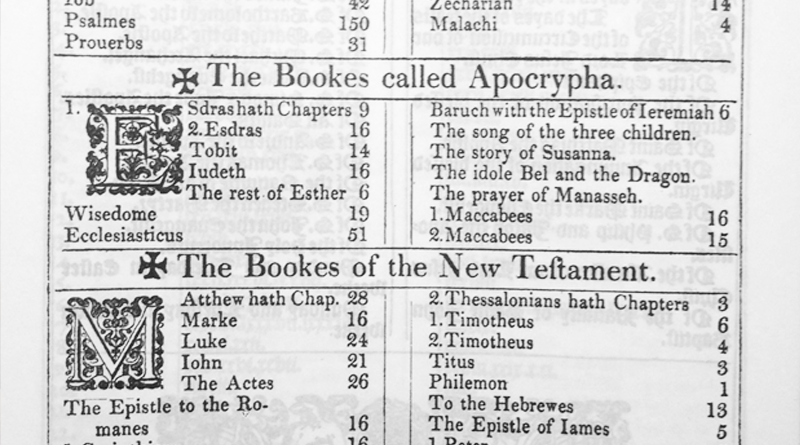
Once in a while, you may notice that one of the readings on Sunday is from a book that you won’t find in your Bible. That is because it comes from a collection of seven books we call The Apocrypha and two or three times a year you will hear readings from two of them: The Wisdom of Solomon and Ecclesiasticus. These ‘extra books’ were written in Greek sometime between the ending of the Hebrew Old Testament and the coming of Christ. When the Old Testament was translated from Hebrew into Greek a few hundred years before Jesus’s birth, these books were included with it.
As the Early Church worshipped, they carried on a gradual process of recognizing which books are inspired by God himself, and which others were not, even though they were helpful for Christians to read. The Church did not create the canon of scripture, but it did recognize it. “My sheep hear my voice” Jesus says in John 10. Many of the Church Fathers distinguished between these seven books and the twenty four books of the Hebrew Scriptures, placing them on a lower footing, but permitting them to be read. But it was not until the Reformation in the 16th and 17th Century that the churches began to draw bright lines. Protestants, following up on the Fathers’ doubts, separated these books from the Bible while Roman Catholics gave them the full authority of scripture, while acknowledging that they are in a separate category or Deuterocanon.
Anglicans sided with Protestants, but also held to the ancient ways. We read a few of the most profitable selections from the Apocrypha in service and we encourage reading them in private, but we recognize that they are not inspired directly by God and so we cannot set doctrine by them. This is why at the end of the reading, we say ‘here ends the reading.’ Instead of ‘The word of the Lord.’ For centuries they helped the Church to worship and to understand the meaning of the Scriptures. If you listen to the selections we read, you can see how they point to Jesus Christ.
If apocryphal texts are not scripture, then why would we read them at all, especially on Sundays in the place where we usually read scripture? First of all, we use several kinds of extra-biblical ‘texts’ in our Sunday service that help put us in the right frame of mind. The most obvious one is our hymns and worship songs. Although the lyrics are not inspired of God, they still inspire us to worship him, and many of them are rightly treasured as reliable guides as we worship in Spirit and Truth. We also use written prayers, time-tested verses that summarize and distil the truths found in the Bible. And of course we recite the Nicene Creed every Sunday, which fixes the essential truths about God with the authority of Christ’s body, the Church.
Another reason that we treasure the Apocryphal texts is because they form a key part of the Church’s tradition. ‘Tradition’ does not mean just the way things were always done. Tradition is an indispensable tool that helps us to discern the meaning of God’s Word to us in the scriptures. Even though there are many opinions out there on what the Bible ‘really means,’ we orthodox Anglicans do not believe that scripture means whatever any one individual wants it to mean. So how do we tell the difference between what the Bible really means and the private judgment of one or another Bible teacher or divinity school professor? Tradition helps us.
A good example of how this works is the United States Constitution. The Constitution is the ‘Bible’ for how our country is run. However, judges still need to interpret it, and decide what the Constitution means. To help them do this, judges consult the writings of the framers of the Constitution and also its earliest hearers to help them understand what people thought it meant early on. Likewise, when we come to interpret what the Bible means, we need to understand what its earliest hearers thought it meant. Although the Holy Scriptures are always in first place, we cannot do without the witness of the tradition, which helps us understand how the Church has read those scriptures together throughout time. The books of the Apocrypha are part of that body of early church texts, hymns, and creeds that shed light on Holy Scripture and their age and consistent use in the church for centuries gives them a special place in our worship.